The Belgian's Unlikely Commission
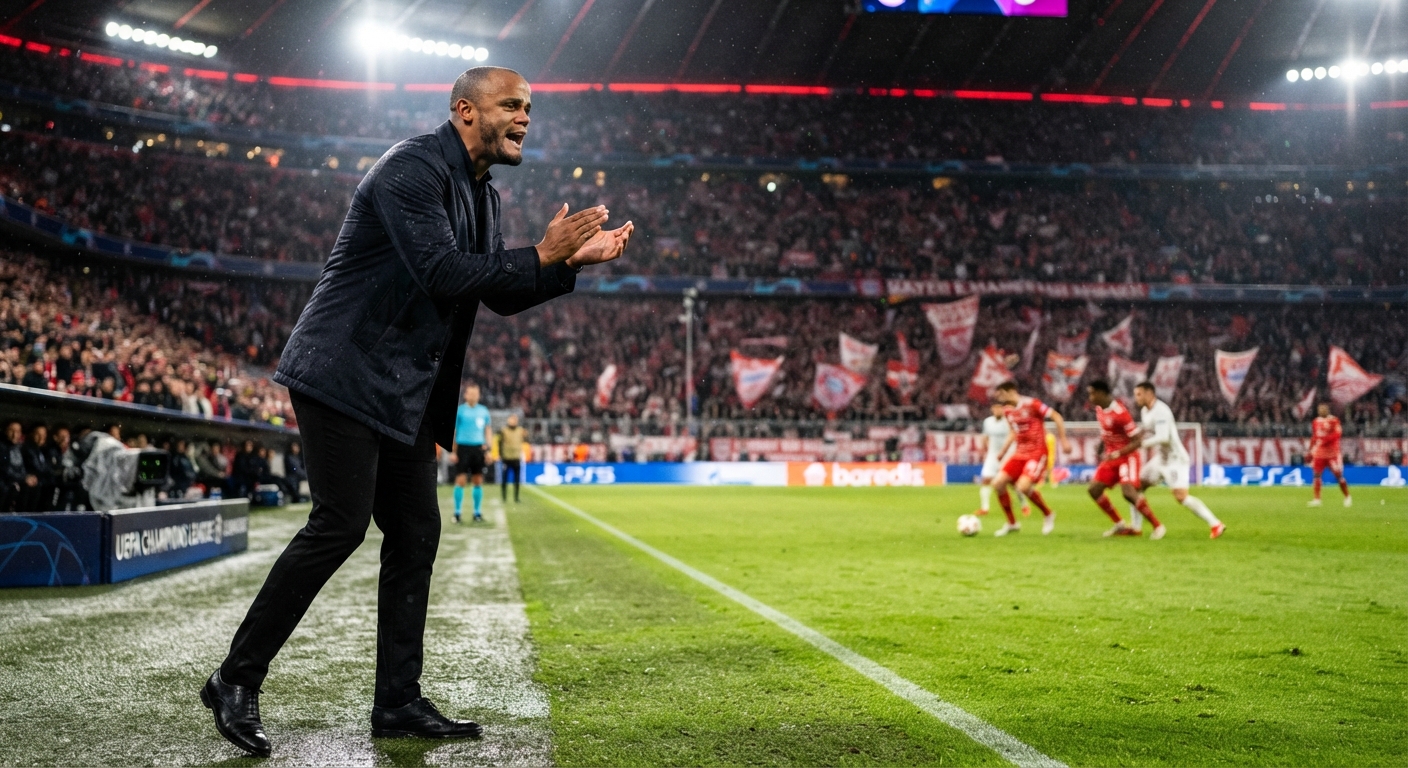
When Bayern Munich appointed Vincent Kompany as manager in the summer of 2024, the dominant reaction was puzzlement. Here was a defender-turned-manager with eighteen months of Bundesliga experience, a coach who had steadied Burnley through a brutal Premier League relegation battle before impressing in the Championship, but nothing on his résumé that obviously prepared him for the Champions League, a Bundesliga title race, and a dressing room stacked with world-class egos all at once. The German football establishment greeted the appointment politely, and privately, sceptically.
By the following spring, with Bayern sitting top of the Bundesliga by four points with six games remaining, and through to the Champions League quarter-finals having eliminated PSG and Juventus in successive knockout rounds, the scepticism had curdled into a far more interesting question: how did he do it so fast? Kompany's methods — intensive pressing, aggressive positional play, an openly acknowledged vulnerability to elite individual quality on the counter — are not tactically revolutionary. What sets his Bayern apart is how completely the senior players bought in, how quickly the cultural reset from the Thomas Tuchel era was achieved, and how the Harry Kane-Joshua Kimmich relationship became the club's most productive manager-captain axis since the peak Heynckes years.
Bayern have scored more goals under Kompany than under Tuchel, Nagelsmann or Flick over the equivalent number of matches.
Defence That Starts With the Attack
The central principle Kompany installed at Säbener Strasse is conceptually simple: the safest place to defend is in possession, in the opposition's half. Bayern's press is not a reactive trigger but a proactive one — they overload specific zones to force turnovers before the opponent settles, then transition straight into attacking shape from the moment of recovery rather than resetting into a defensive block first. The average time on the ball per possession sequence is among the shortest in European football. Bayern move the ball quickly, move bodies quickly, and refuse opponents the time to organise.
The pressing intensity numbers back this up. A PPDA of 8.1 is the highest recorded by any Bundesliga title challenger this century, evidence that Kompany has not softened his principles to accommodate the more conservative, results-first mentality often associated with veteran squads carrying Champions League ambitions. If anything, the opposite has happened — his players have got fitter, sharper and more disciplined in their pressing triggers as the season has worn on, a sign the ideas have been absorbed rather than merely tolerated.
That aggression carries an obvious cost. If the first press is broken, Bayern are exposed with space behind their defensive line, and elite counter-attacking teams — Inter, Atletico Madrid, Liverpool among the sides that have punished similar Kompany teams in the past — represent the clearest tactical threat to this project. Kompany does not hide from that trade-off. He would rather concede occasional transition goals than surrender the initiative his pressing scheme provides across ninety minutes. Against PSG and Juventus in the knockout rounds, that calculated risk paid off emphatically.
- Bundesliga goals (Kane): 31 in 34 appearances
- Goals scored, all competitions: 108 in 48 matches (2.25 per game)
- Points from first 50 fixtures: 37 — ahead of Tuchel, Nagelsmann and Flick over the same span
- PPDA (pressing intensity): 8.1 — highest of any Bundesliga title challenger this century
- Champions League knockout scalps: PSG, Juventus
- League lead with six games remaining: four points
Kane and Kimmich: The Engine Room
No single relationship explains Bayern's transformation better than the one between Kane and Kimmich. Kane arrived in Munich burdened by the tag of the best striker never to win a major trophy, and under Kompany his movement has changed shape entirely — dropping deeper to link play, then timing late runs into the box that Kimmich, restored to his favoured deep-midfield role rather than shunted to full-back, feeds with the kind of incisive, disguised passing that made him one of the finest passers of his generation before injuries and positional confusion blunted his influence under previous regimes.
Kompany's masterstroke was structural as much as tactical: he gave Kimmich licence to dictate tempo from deep, trusted his captain's reading of the game to organise the press verbally, and built the entire midfield around protecting that platform. The dividend has been a captain playing with the authority he had at his peak, and a striker scoring at a rate that suggests the trophy drought talk may finally be behind him.
"When you build a team around trust instead of fear, players stop protecting themselves and start protecting each other. That is the only difference between this Bayern and the one I inherited." — Vincent Kompany, Bayern Munich manager
What Comes Next
The remaining Bundesliga fixtures look navigable on paper, but Kompany's sternest examination arrives in Europe, where the counter-attacking sides he has already flagged as Bayern's kryptonite lurk in the draw. A quarter-final against a side built to break at pace would tell us far more about the durability of this project than another routine Bundesliga afternoon. Kompany has shown he can install a philosophy and win over sceptical veterans inside a single season — the next test is whether that philosophy survives contact with opponents built specifically to exploit it.
What is already clear is that Bayern's identity crisis, real or perceived, has been resolved with startling speed. The pressing is back, the captain is thriving, and the club's biggest-money signing in a decade is finally playing like it. Whatever happens in the knockout rounds, the sceptics who greeted Kompany's arrival with polite doubt have, for now, gone quiet.