Summer transfer windows that follow a World Cup have a special quality, and the one that opened three weeks ago — with the tournament itself still rumbling through its Round of 16 stage — has already become one of the most frenzied on record. Players anonymous to all but the most dedicated scouts in May are now the subject of release-clause negotiations run through lawyers in three time zones. Six weeks of extraordinary football, played out across an expanded 48-team format that gave more countries and more fringe talents a stage than ever before, has rewritten valuations at a pace even seasoned negotiators say they have not seen since the Croatia effect of 2018.
The goal that changed a career
Nowhere is that clearer than in the case of Cape Verde, whose run to the last 32 remains the defining story of the group stage after their 2-1 win over Brazil sent the five-time champions into a nervous scramble to qualify. The goal that finished that game — a driven, first-time strike from just inside the box in the 84th minute — belonged to Yannick Livramento, a 24-year-old forward who had spent two seasons in Portugal's second tier without a single senior cap before the tournament. Within 72 hours of full time, his agent had fielded calls from clubs in four countries. Within a fortnight, Sunderland had agreed a club-record fee, reported at close to nine million pounds, to take him to the Stadium of Light, with a sell-on clause inserted that suggests the Championship side expects him to move again within two years. It is the kind of deal that would have been unthinkable in April, when Livramento was available on a free transfer with eighteen months left on his contract.
Eighteen months of scouting, compressed into ninety minutes, repeated five times.
Africa's breakout generation cashes in
Livramento is not an isolated case. Morocco's run to the quarter-finals, built around Achraf Hakimi's relentless overlapping and a defensive block that conceded barely a shot of note in the group phase, has had a knock-on effect across the continent's market. Hakimi does not need a World Cup to inflate his price, but the tournament has done exactly that for several of his compatriots and rivals. Senegal found a new star in Assane Diouf, a 22-year-old forward who had been playing in the Belgian second division as recently as January and finished the group stage with four goals, prompting Everton to move fast and beat West Ham to a deal worth an initial fourteen million pounds. Ghana's Baba Iddrisu, a holding midfielder who nullified two attacking talents in the space of a week, has attracted interest from three Premier League top-half clubs.
- Yannick Livramento (Cape Verde, 24): Sunderland, club-record fee near £9m
- Assane Diouf (Senegal, 22): Everton, £14m, beating West Ham to his signature
- Baba Iddrisu (Ghana): courted by three Premier League top-half clubs
- Cape Verde 2-1 Brazil: the shock result that launched the market frenzy
- 14 of the 20 most expensive deals since the knockouts began involve a Premier League buyer
Agents representing African players have been explicit about the leverage the tournament handed them. One, speaking on condition of anonymity, described the window as scouting compressed into a handful of knockout nights, and admitted his phone had not stopped ringing since his client's opening match. That dynamic has repeated across almost every federation with a breakout run — reputation can now be built and monetised inside a single tournament rather than a career.
The Premier League's spending spree
English clubs have been the most aggressive buyers by a distance, a pattern that has held through three consecutive World Cups and shows no sign of reversing. Broadcast revenue, a pound that still buys more purchasing power than most European currencies can match, and a squad-cost regulation framework that rewards buying young and reselling have combined to make the Premier League the destination of choice for agents managing a breakout summer. Of the twenty most expensive transfers completed or in advanced negotiation since the knockout rounds began, fourteen involve a Premier League club as the buyer. Manchester City and Liverpool, still absorbing the disappointment of losing the title race to Arsenal in May, and City still smarting from a Champions League final defeat to Real Madrid, have been notably active for exactly this kind of undervalued, tournament-tested talent.
"You cannot coach what these boys just showed the world under that pressure. If you can find a way to sign them before the price catches up with the performance, you have done your job." — Kieran Maguire, football finance analyst
Where the money goes next
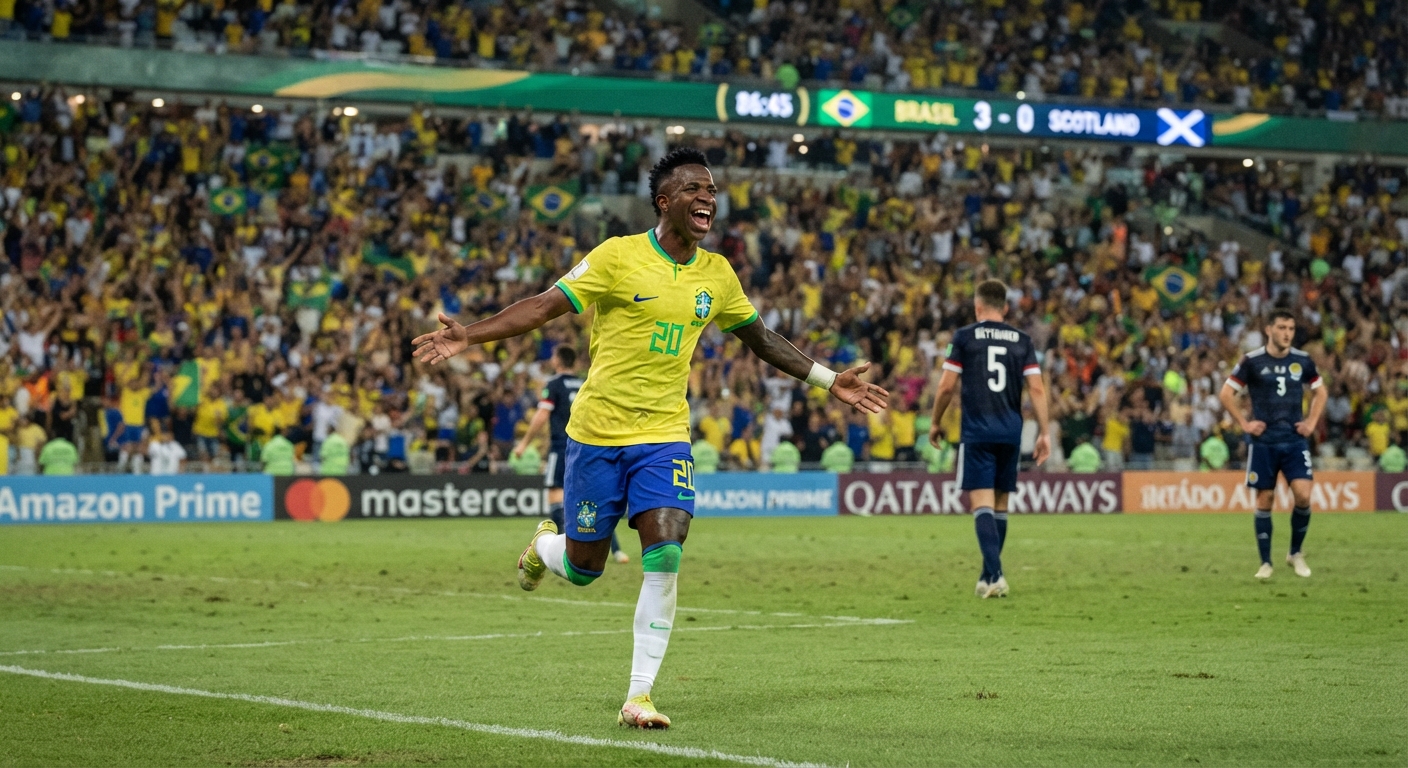
What makes this window different from previous post-World Cup frenzies is the sheer breadth of nations now producing tournament-ready talent that clubs feel confident buying on the strength of six matches. It is not only established powers like Morocco supplying reinforcements; it is Cape Verde, a nation of half a million people, sending a forward to the Championship on the back of one moment of composure against Brazil. Scouts who watched Scotland's 3-0 defeat to Brazil, in which Vinicius Jr scored yet again on his way to a tournament that has already yielded a brace against Serbia, have quietly noted that his valuation, already stratospheric, is now beyond the reach of anyone bar two or three clubs on the planet. For everyone else, the lesson has been to look further down the bracket, where late goals and quiet destroyers of midfields are being unearthed weekly, and where the gap between an anonymous contract and a club-record fee can close in under a fortnight.
With the Round of 16 still to be decided and the final not due at MetLife Stadium until 19 July, agents and recruitment departments know the market has not finished moving. Every remaining knockout tie is, in effect, an audition for a fee that did not exist a month ago.