History Says This Cannot Be Done
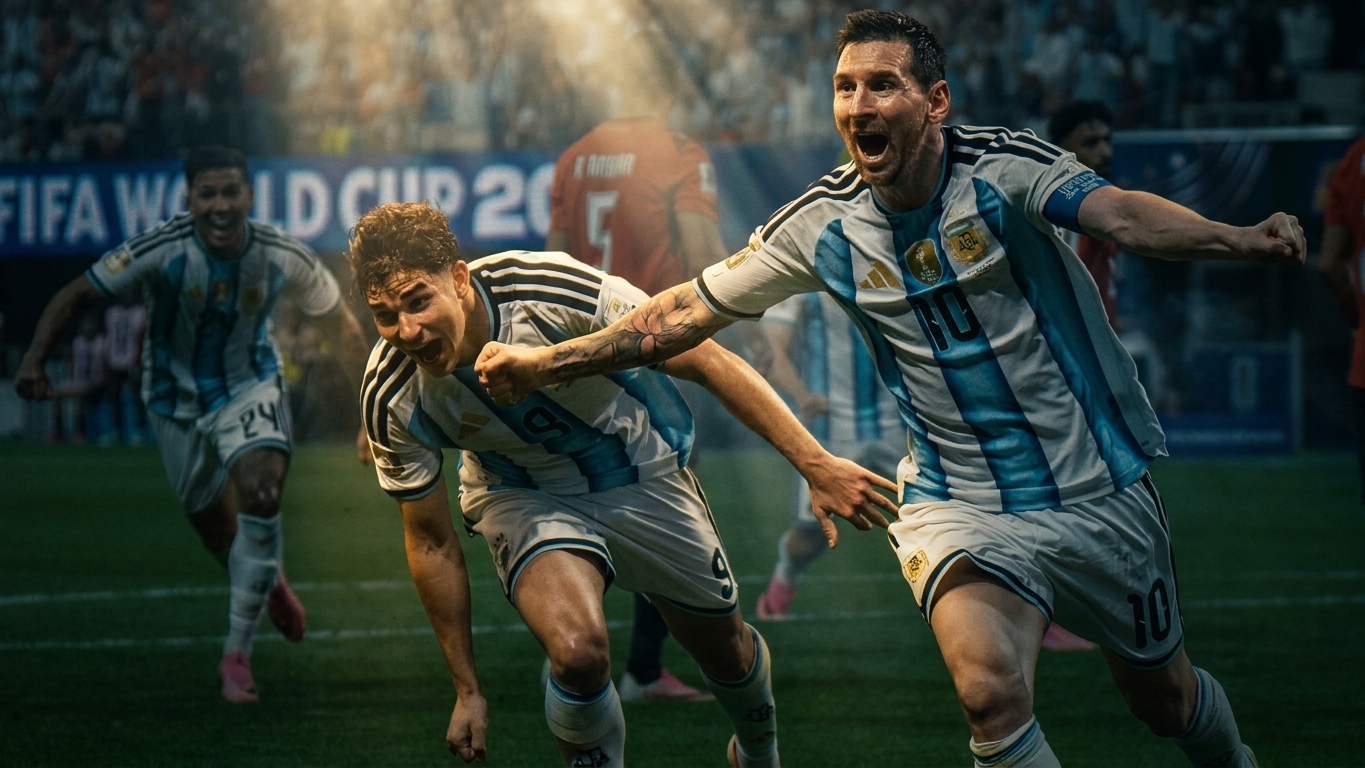
Brazil managed it in 1958 and 1962. Italy did it in 1934 and 1938, back when the World Cup was a fraction of its current size and half of Europe still ignored the competition. Nobody has retained the trophy in the six decades since football globalised and the gap between leading nations narrowed. Argentina have reached the Round of 16 of the 2026 World Cup still chasing something the modern game has quietly decided is impossible, and they are doing it with a 38-year-old Lionel Messi in the squad rather than despite him.
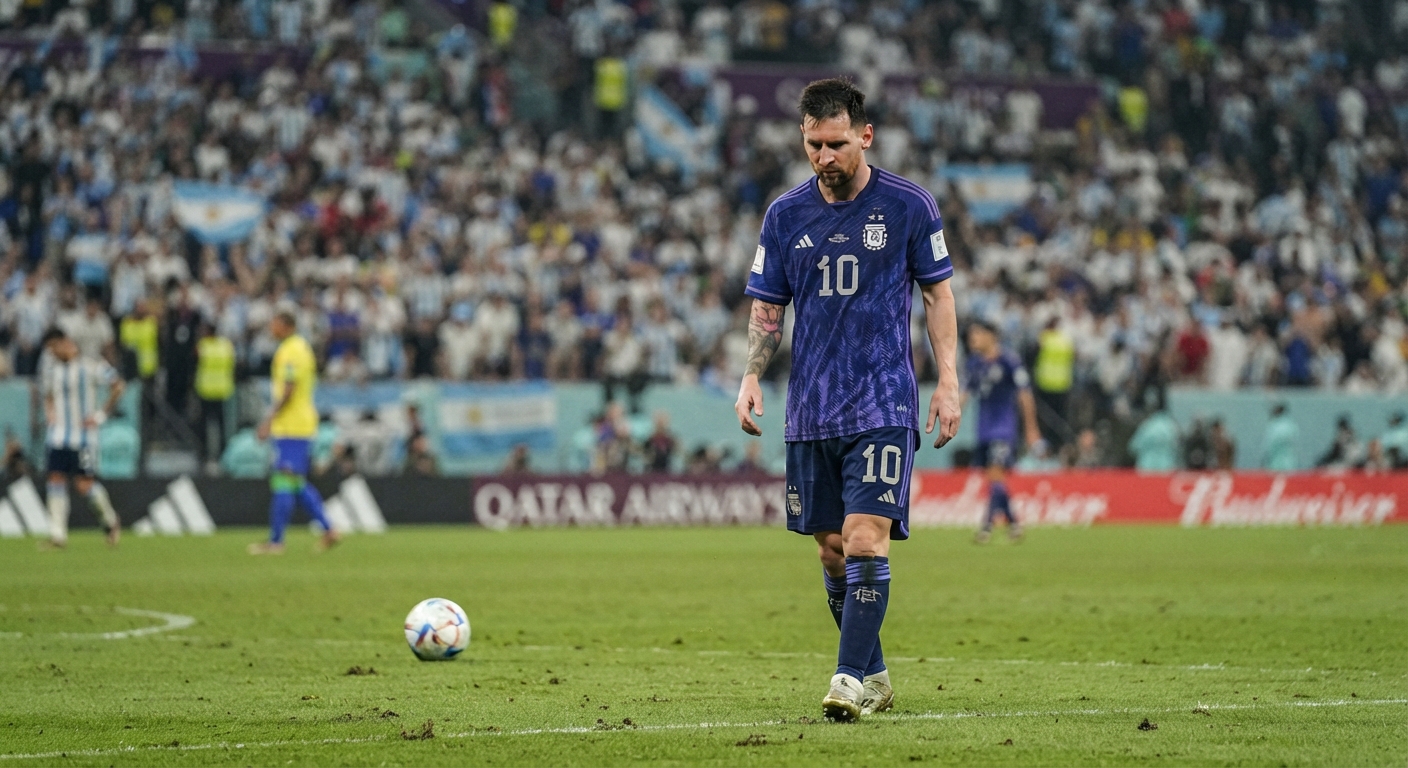
The 2022 triumph in Qatar was built on Lionel Scaloni's tactical structure, a settled defensive spine, and Messi playing the finest tournament football of his career at 35. Four years on, the structure survives largely intact, and the team has carried it all the way to the last 16 in North America. What nobody could guarantee in advance was whether Messi's body would hold up long enough to matter again on this stage. That question has followed Argentina into every match so far, and it will follow them into whatever comes next.
The Numbers Behind the Favourites Tag
Since lifting the trophy in Doha, Argentina have won 27 of 38 matches, drawn eight and lost only three — the best winning percentage of any leading footballing nation over that stretch. They topped a brutal CONMEBOL qualifying group with 37 points from 18 games and conceded so rarely along the way that they recorded 11 clean sheets, the best defensive return in South America. Six of the eleven who started the Qatar final remain first-choice picks in Scaloni's XI. This is not a team coasting on reputation. It is a team that has simply kept winning, all the way to the knockout rounds of a second straight World Cup.
- Record: 27 wins, 8 draws, 3 losses in 38 matches
- Qualifying: topped CONMEBOL group with 37 points from 18 games
- Clean sheets: 11 in qualifying — best defensive record in South America
- Continuity: 6 of the 11 Qatar final starters remain first-choice
- Messi, 2025-26 club form: 18 goals in 22 appearances for Inter Miami
- Álvarez, 2025-26 club form: 24 goals for Atlético Madrid
Messi's own numbers tell a more complicated story. Eighteen goals in 22 appearances for Inter Miami this past season is a serious return for a player his age, but it arrived inside a schedule his club rationed carefully to protect him for exactly this tournament. Whether that management translates into surviving deep into a knockout run, in the heat of North American summer venues, remains the unresolved variable sitting at the centre of Argentina's campaign.
Argentina no longer need Messi to be the best player at the World Cup. They just need him to still be a very good one, for ninety more minutes at a time.
Álvarez Has Made the Succession Look Easy
If there is a reason Argentina do not need Messi to be transcendent again, it plays for Atlético Madrid and answers to Julián Álvarez. Twenty-four goals this season at 25 years old, in a league that does not hand out easy fixtures, is the kind of return that should have made him a global superstar rather than a name still routinely underrated outside South America. Álvarez gives Scaloni a spearhead capable of winning matches alone, and that changes the calculation around Messi entirely. Rather than needing to be the difference-maker every time, Messi can operate as the creator behind a striker already scoring at a genuinely elite rate.
That division of labour is the biggest tactical shift since Qatar. In 2022, Argentina's attack ran through Messi because it had to. In 2026, it can run through Álvarez, with Messi picking his moments — deployed as a No. 10, dropped deep to dictate tempo, or pushed forward as a second striker, whatever a given match demands.
"Leo doesn't have to save us anymore. He can just play football, and that is more dangerous for opponents than anything we had in Qatar." — Lionel Scaloni, Argentina head coach
A Defence That Cannot Hide Its Age
The problem Scaloni cannot coach around sits in central defence. Cristian Romero remains combative and reliable, but Nicolás Otamendi turns 38 this year and is playing on positioning and reading of the game rather than recovery speed. Against the sharp counter-attacking sides that survive into the Round of 16, that lack of pace behind the ball is the single most exploitable weakness in Argentina's setup. It surfaced in patches during qualifying and has not disappeared simply because the team keeps winning games regardless.
Scaloni's mid-block is designed precisely to compensate: sit in a compact 4-4-2, deny space in behind, force opponents into low-value crosses and shots from distance. It worked spectacularly across seven matches in Qatar. Whether it holds up against knockout opposition with genuine pace in the final third — the kind Argentina will meet with increasing regularity from here — is the question that will decide whether this squad becomes the first in over sixty years to retain the World Cup.
Enough, Not Great
That is ultimately the case for Argentina in July 2026. This is not a team built to be dazzled by; it is a team built to be difficult to beat, with a 38-year-old genius who no longer has to carry it alone and a 25-year-old finisher who has quietly become one of the most productive strikers in world football. Messi does not need another Qatar final performance to justify his place in this squad. He needs to keep doing what he has done for four years since — showing up, still elite in short bursts, still capable of the pass or moment nobody else on the pitch can produce.
History says repeating as world champions cannot be done in the modern era. Argentina's response, four years and 38 matches into the attempt, has been to stop worrying about history and simply keep winning. Whether that is enough to get past the Round of 16 and all the way back to a final depends on whether Otamendi's legs hold up, whether Álvarez keeps finishing like Atlético's best player, and whether Messi, one more time, can be enough.