A Club in Crisis, A Coach With a Plan
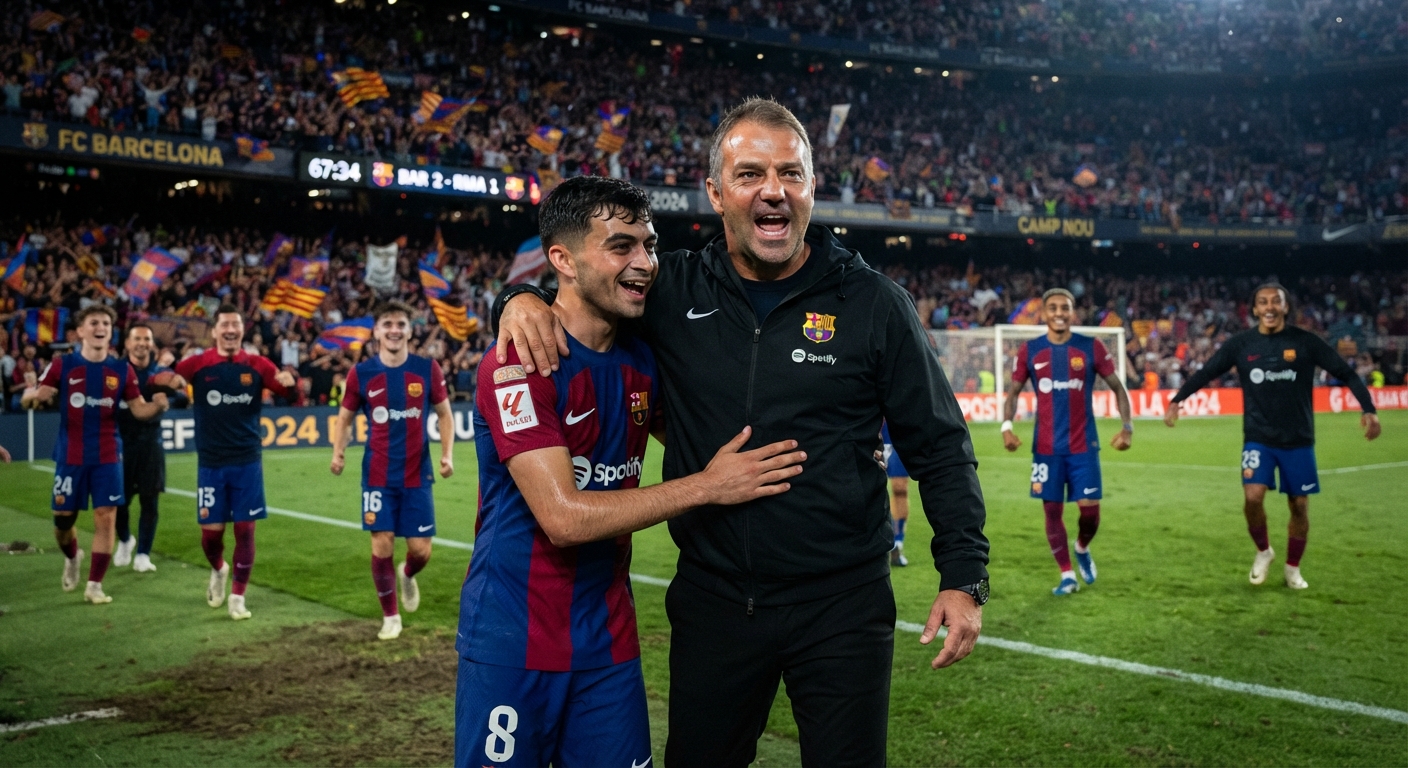
In the summer of 2024, Barcelona were €1.2 billion in debt, hemmed in by La Liga's financial fair play rules, and appointing their fourth manager in three seasons. Hansi Flick arrived off the back of a miserable spell with Germany, greeted by a fanbase too battered by false dawns to get excited. Within six months he had built the most watchable Barcelona team since peak Guardiola. The speed of it was the surprising part.
Flick's Bayern Munich teams pressed at a ferocity few European sides could match, and his 8-2 demolition of Barcelona in the 2020 Champions League remains the darkest afternoon of the club's recent history — a detail he addressed head-on in his first press conference rather than avoid. What he inherited in Catalonia was a squad of gifted young players schooled to circulate the ball patiently but never to press with real purpose. Rewiring that instinct usually takes a full pre-season at minimum. Flick did it in weeks, which says as much about the players' hunger to be coached as it does about his own methods.
Barcelona scored more league goals in one season than at any point in the club's 125-year history.
The numbers back up the eye test. Barcelona scored 99 goals in La Liga during 2024-25, the first time in the club's history they have crossed that mark in a single domestic campaign. They reached the Champions League semi-finals, scoring three or more goals in every knockout tie along the way. Their pressing intensity, measured by passes allowed per defensive action, sat at 7.3 — among the three most aggressive figures in any of Europe's top leagues. Off the pitch, the wage bill that once swallowed 110 percent of revenue in 2021 had been trimmed to 68 percent by 2026, the boring financial groundwork that made the football possible in the first place.
- Debt inherited: €1.2 billion, summer 2024
- 2024-25 league goals: 99, a club record
- Wage-to-revenue ratio: down from 110% (2021) to 68% (2026)
- Pressing intensity: 7.3 passes per defensive action, top three in Europe
- Champions League: semi-finalists, 3+ goals in every knockout tie
- Managerial turnover before Flick: four coaches in three seasons
Lamine Yamal and a Team That Refuses to Have One Star
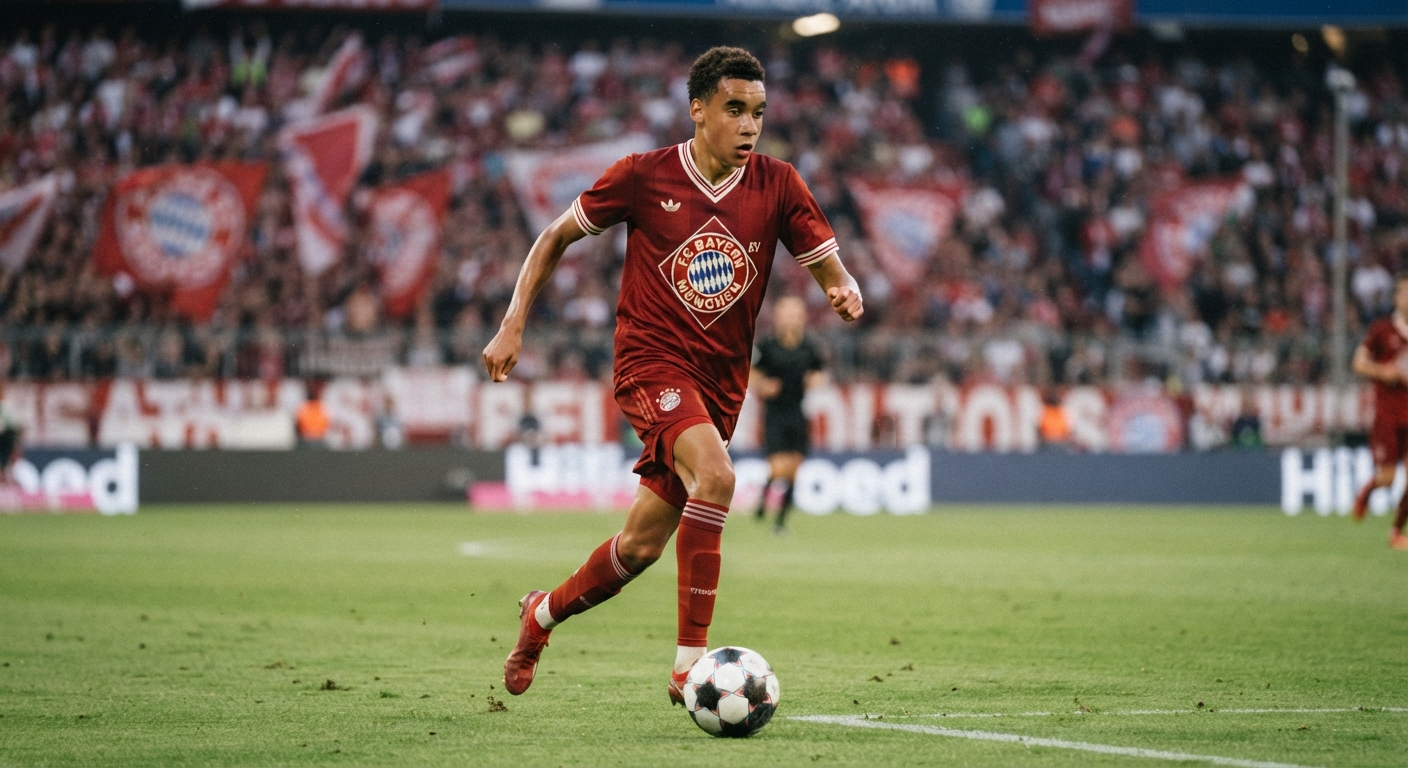
Every era-defining Barcelona side has revolved around a single creative axis — Xavi, then Iniesta, then Messi — the player through whom everything eventually passes. Flick's version is built differently. The creativity is distributed across the team rather than funnelled through one man, with Lamine Yamal as its most electric outlet rather than its sole engine. That distinction matters tactically: opponents cannot simply detail a man-marker to Yamal and expect the problem solved, because Gavi, Pedri, Dani Olmo and Raphinha all carry comparable end-product from different areas of the pitch.
None of that diminishes what Yamal himself produces. He finished 2024-25 with 22 goals and 19 assists, becoming the youngest player in La Liga history to reach 40 direct goal contributions in a single season. His two-footedness is the key to why full-backs cannot set a defensive plan against him — he is as comfortable cutting inside off the right as he is running the outside channel on his weaker foot. Nominally he starts as a right winger, but in Flick's structure he shows up everywhere, dragging opposition shape apart before the ball has even reached him.
"When you press like this, you don't need one genius. You need eleven players who trust the next one to cover the space he leaves behind." — Hansi Flick, on Barcelona's collective identity
Pedri's Quiet Reinvention
If Yamal supplies the theatre, Pedri supplies the engineering. His 2025-26 numbers — 11 goals and 18 assists — are career-best figures for a player previously valued more for control than end product. Flick has pushed him into zones where his passing range does the most damage, closer to the opposition box rather than exclusively dictating tempo from deep. The result is a midfielder who now finishes moves as often as he starts them, which changes how defences have to account for him. Teams that once let Pedri roam freely in his own half, confident he posed no direct goal threat, no longer have that luxury.
A Press Built on Trust, Not Just Instructions
What separates Flick's Barcelona from previous high-pressing sides at the club is that the press is not merely a tactical instruction bolted onto a possession-based identity — it is now the identity. Players trigger presses collectively and recover shape instinctively, the sort of coordination that normally takes seasons to embed rather than months. It is why Barcelona can lose the ball 35 yards from their own goal and still win it back before an opponent has had time to look up.
This is a Barcelona side built to win the ball back faster than it can be lost.
There is still work to finish. The club's debt has not vanished, and La Liga's spending controls remain a constant background pressure on every transfer window. But the football itself has answered the question that hung over Flick's appointment: could a coach known for German directness translate that into a Barcelona built on Cruyffian principles? Eighteen months in, the answer is emphatically yes — and La Liga's chasing pack has been given fair warning.