A Question Asked and Answered Fifteen Times
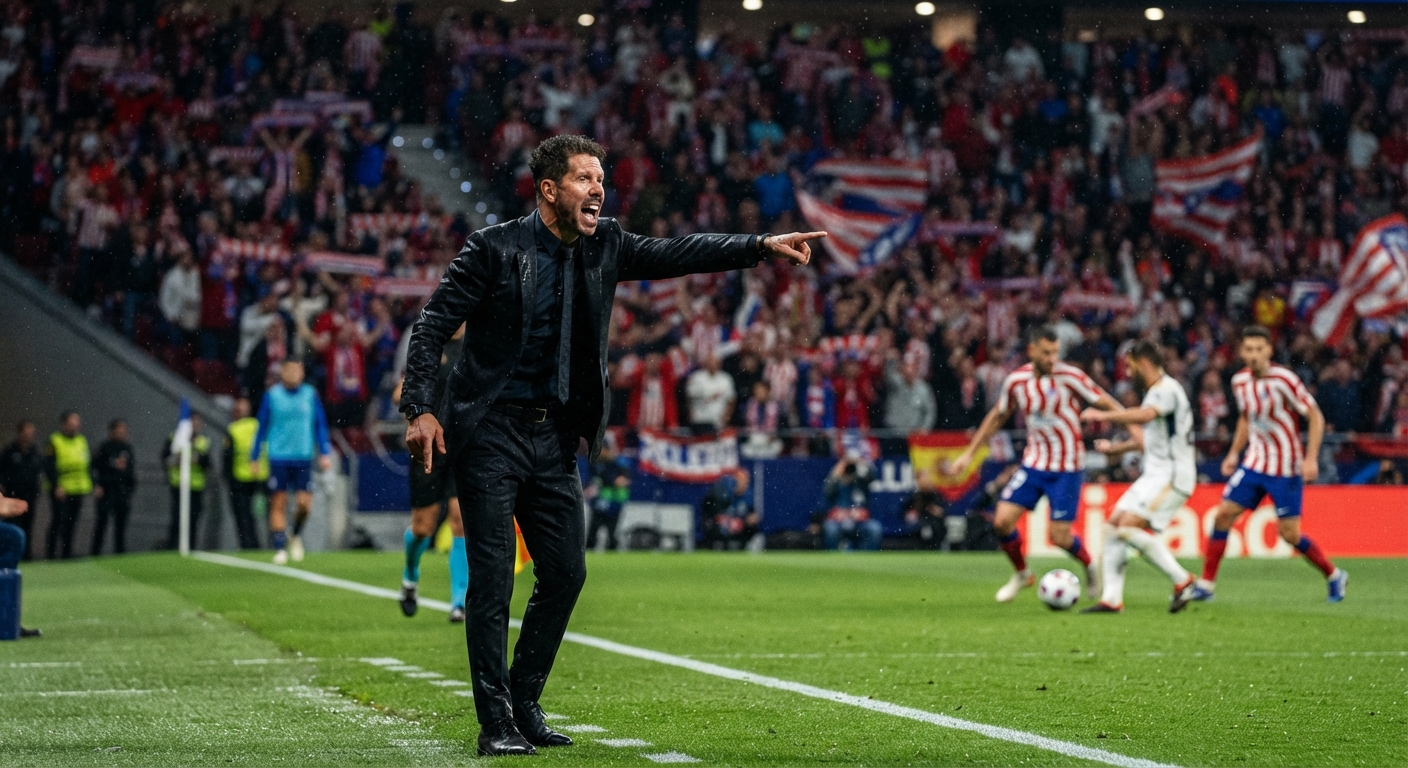
Diego Simeone has managed Atletico Madrid for fifteen years, longer than any coach at a top European club in the modern era. In that span he has won two La Liga titles, two Europa Leagues, one Copa del Rey, and reached two Champions League finals, both against Real Madrid, all while working with a fraction of the resources available to his rivals. Every summer since roughly 2018, someone in the Spanish press has written that Simeone's cycle is finally over, that the players have stopped running for him, that the football has gone stale. Every season, Atletico have answered with results. The 2025-26 campaign, which finished with Simeone's side second in La Liga, seven points behind Real Madrid with six games to go before the run-in began, was no exception.
It was not a title challenge in the way Atletico mounted in 2013-14 or 2020-21. But it was a competitive position that Barcelona, with vastly greater spending power and a squad built to dominate technically, could not sustain across the full season. That Simeone's rebuilt team, anchored by Julian Alvarez and featuring Antoine Griezmann in what turned out to be his final professional season, could still finish above a Barcelona side with superior individual talent says something about the durability of both the manager and his methods.
Nobody has coached a bigger club for longer in modern European football, and nobody has done it with less room for error.
The Press That Nobody Notices
The lazy caricature of Simeone's Atletico is that it is negative, cynical, built to strangle games rather than win them with style. That description was never entirely fair, and it is even less accurate now. Atletico's defensive block presses specific triggers in their own half with real aggression, disrupting opposition build-up at the source rather than simply retreating and hoping to survive. They win the ball back higher up the pitch than their reputation suggests, and they have become considerably more dangerous in open, sustained possession rather than relying purely on the counter-attack that made Simeone's early Atletico famous. That shift did not happen by accident. It reflects a coach willing to adjust his tactical framework as the players around him have changed, even while the underlying identity, discipline, aggression, collective sacrifice, has stayed constant.
Julian Alvarez's arrival transformed the attacking side of that equation. Previous Atletico centre-forwards were often asked to hold the ball up, bring midfielders into play, and subordinate personal numbers to the team's structure. Alvarez does all of that and still produces the individual output of an elite striker, finishing the season with 24 goals across all competitions, arguably the best individual campaign by an Atletico forward in the club's modern history. He runs channels that previous number nines in this system rarely explored, arrives late from deeper positions to add a second wave to attacks, and finishes with a composure that puts him among the best centre-forwards in world football right now. He has given Simeone license to be more expansive without sacrificing the control that has always defined his teams.
- Tenure: 15 years in charge, longest of any coach at a top European club
- Major honours: 2 La Liga titles, 2 Europa Leagues, 1 Copa del Rey
- 2025-26 finish: 2nd in La Liga, 7 points behind Real Madrid with 6 games left
- Julian Alvarez: 24 goals in all competitions this season
- Antoine Griezmann: 261 goals for the club, the all-time record
- Champions League finals reached: 2, both lost to Real Madrid
Griezmann's Final Bow
Antoine Griezmann's retirement, announced for June 2026, closes one of the defining individual careers in Atletico's history. His 261 goals for the club stand as the all-time record, surpassing legends of the Vicente Calderon and Metropolitano eras alike. What made Griezmann's final season under Simeone notable was not just the goals but the role he accepted, dropping into midfield, linking play, and ceding the primary scoring burden to Alvarez without complaint. That willingness to subordinate ego to team function has been the through-line of every successful Simeone side, from Diego Costa's early sacrifices to Griezmann's own reinvention across a decade at the club. Finding players prepared to accept that trade-off, talent in service of structure, has arguably been Simeone's greatest and least appreciated skill.
"El Cholo doesn't ask you to be the best player. He asks you to be the player the team needs that day. That is harder, and it is why we keep winning things we shouldn't win on paper." — Koke, Atletico Madrid captain
A Method Built to Outlast Fashion
Football tactics move in cycles, and plenty of coaches who were fashionable a decade ago have been swept aside by the game's obsession with positional play and high-line pressing systems that require squads of technically flawless footballers. Simeone never chased that fashion, and Atletico's transfer budget, dwarfed by Real Madrid's and Barcelona's, never allowed him the luxury of assembling one anyway. Instead he has built something closer to a philosophy than a system: a demand for maximum effort, a refusal to accept individual brilliance as a substitute for collective work, and a willingness to grind out results that on paper his squad had no right to get.
That approach has occasionally been unfashionable, even ridiculed, but it has never stopped producing. Finishing above Barcelona this season, with a squad built around one transformative signing and a departing legend playing a supporting role, is exactly the kind of result that keeps extending Simeone's cycle whenever critics declare it finished. Fifteen years in, the question of whether his time is up keeps getting asked, and Atletico keep finding new ways to answer it on the pitch rather than in the press conference.